

Multi-Warehouse Management: A Guide for Growing Sellers
Learn how multi-warehouse management software helps Indian sellers sync inventory, automate order routing, reduce shipping costs, and deliver faster.
.png)
Multi-Warehouse Management: AGuide for Growing Sellers
Quick Answer
Multi-warehouse management means running inventory, orders, and fulfillment across more than one storage location from a single system, instead of manually tracking each warehouse separately. For growing sellers in India, this typically means choosing a platform with real-time stock sync across locations, automatic order routing to the nearest warehouse, and one dashboard for all sites — which cuts delivery times, reduces stockouts, and lowers per-order shipping cost as order volume grows.
Most sellers start with one warehouse and onespreadsheet. It works — until orders start coming from cities your singlewarehouse can't serve quickly, or your one location runs out of a fast-movingSKU while stock sits idle somewhere else. That's the point wheremulti-warehouse management stops being a 'nice to have' and starts directlyaffecting delivery speed, cancellations, and margin. This guide covers whatmulti-warehouse management actually involves, the numbers behind why it mattersright now, and how to set it up without the operational chaos.
India's Warehousing Boom: The Numbers
A few data points worth knowing before you planyour warehouse network:
• India'se-commerce warehousing market alone was valued at roughly USD 8.5 billion in2024 and is projected to reach USD 35.6 billion by 2033 — a 17%+ CAGR, amongthe fastest-growing warehousing segments in the country.
• The broaderIndian warehousing market is expected to grow from roughly USD 60 billion in2024 to well over USD 100 billion by 2030, driven largely by e-commerce andquick commerce demand.
• Warehouse demandoutpaced supply by an estimated 1.4x in 2023, and total warehousing space isprojected to grow from 344 million sq. ft. in 2023 to 516 million sq. ft. by2026 — a sign of how fast sellers and logistics players are decentralizingstorage.
• Quick commerceplayers are leading this shift toward smaller, distributed sites: Swiggy's darkstores, for example, grew to an average of roughly 4,000 sq. ft. in 2024, about42% larger than the year before, specifically to hold more SKUs closer to customers.
The pattern across all of this data is the same:sellers are moving from one large, central warehouse to several smaller,well-placed ones. That only works if the system managing them can keep up.
What Multi-Warehouse Management Actually Means
At its core, multi-warehouse management is theability to answer three questions correctly, in real time, without manualreconciliation:
• Where is this SKUin stock right now, across every location?
• Which warehouseshould fulfill this specific order, based on proximity, stock, and cost?
• What happens tostock levels everywhere else the moment this order is placed?
Sellers running multiple locations onspreadsheets or disconnected systems usually answer these manually — which iswhere overselling, delayed dispatch, and mismatched stock counts creep in asorder volume grows.
Single Warehouse vs Multi-Warehouse Setup — At a Glance
Step 1: Map Demand Before You Map Warehouses
Before adding a second or third location, lookat where your orders actually come from. Most growing sellers find 60-70% ofdemand concentrated in 3-4 cities or regions — that's usually where the firstadditional warehouse or dark-store partnership should go, not wherever realestate happens to be cheapest.
Step 2: Choose a System With Real Warehouse-Level Inventory Sync
Not every inventory tool actually managesmultiple warehouses — some just let you tag a location without syncing stock inreal time. Look for:
• Live stock syncacross all locations, so a sale in one warehouse instantly updates availabilityeverywhere else
• Automatic orderrouting that assigns each order to the nearest or most cost-effectivewarehouse, rather than defaulting to one location
• A singledashboard view across all warehouses — not separate logins or spreadsheets persite
• Support for splitshipments, when a single order needs to be fulfilled from more than onelocation
This is where COSTBO's seller platform is builtspecifically for this problem: multi-warehouse inventory sync, automatic orderrouting to the nearest fulfillment point, and same-day to 20-minute deliveryoptions across 40+ cities — all managed from one dashboard rather than jugglingsystems per warehouse.
Step 3: Set Reorder Rules Per Location, Not Just Per SKU
A common mistake: setting one reorder thresholdfor a product company-wide, when demand for that SKU is completely different ineach city. Multi-warehouse management done well sets minimum stock levels perwarehouse per SKU, so a fast-moving product in Mumbai doesn't run out while thesame product sits overstocked in a slower warehouse.
Step 4: Build Routing Logic Around Cost and Speed, Not Just Proximity
The nearest warehouse isn't always the cheapestor fastest option once you factor in local delivery partner rates, currentstock levels, and order size. Growing sellers typically set routing rules thatweigh:
• Distance to thedelivery address
• Current stockavailability at each candidate warehouse
• Per-ordershipping cost from each location
• Promised deliverywindow (same-day, next-day, or quick commerce)
Step 5: Monitor Warehouse-Level Performance, Not Just Overall Numbers
Once multiple warehouses are live, trackperformance per location, not just in aggregate:
• Fulfillmentaccuracy and cancellation rate by warehouse
• Average dispatchtime per location
• Stockoutfrequency by SKU per warehouse
• Shipping cost perorder by location, to catch when a warehouse is quietly becoming your mostexpensive one
Common Mistakes Growing Sellers Make
• Adding a secondwarehouse before demand data justifies the location, based on guesswork ratherthan actual order geography
• Running separate,disconnected inventory sheets per warehouse, which leads to overselling andmismatched stock counts
• Setting onenational reorder threshold per SKU instead of per-warehouse thresholds
• Routing everyorder to whichever warehouse is 'default' rather than the one that's actuallyfastest or cheapest for that order
Frequently Asked Questions
What is multi-warehouse management ine-commerce?
It's the practice of managing inventory, orders,and fulfillment across more than one storage location through a singleconnected system, so stock levels and order routing stay accurate everywhere inreal time.
How many warehouses does a growing selleractually need?
There's no fixed number — most sellers add asecond or third location once 60-70% of their order volume is concentrated inspecific cities or regions that a single warehouse can't serve quickly.
Does multi-warehouse management require separatesoftware for each location?
No — the goal is the opposite. A goodmulti-warehouse setup uses one system with warehouse-level visibility, ratherthan separate tools or spreadsheets per site, which is usually where stockerrors creep in.
How does multi-warehouse management help withquick commerce delivery?
Quick commerce (15-20 minute delivery) dependson stock being physically close to the customer. Distributing inventory acrossmultiple smaller warehouses or dark stores, managed through synced routing, iswhat makes that delivery speed possible at scale.
What's the biggest risk of running multiplewarehouses without proper management software?
Overselling — showing a product as availablebecause it's in stock at one warehouse, when the order actually needs to shipfrom a different, out-of-stock location. This is the most common cause ofcancellations once sellers expand beyond one site.
Ready to Manage Multiple Warehouses From One Dashboard?
COSTBO's seller platform syncs inventory acrossevery warehouse in real time, routes orders automatically to the rightlocation, and supports delivery windows from 20-minute quick commerce toscheduled shipping — all from a single dashboard built for sellers scalingbeyond one location.
bout Costbo
Founded by Mr. Eswar and Mr. Ananth, with nearly 20 years of technology experience, Costbo is a leading ONDC seller platform powering India’s open digital commerce ecosystem. Costbo is among the first ONDC 1.2.0 certified seller platforms, enabling brands and sellers to sell on ONDC with fast onboarding, lower costs, and full operational control.
Ready to grow on ONDC? Start your journey with Costbo today.
Related Reading
• Pan-IndiaDelivery Logistics: Options Compared
• HyperlocalDelivery Providers in India (2026 List)
• How to CutShipping Costs Below 10% of Order Value
• Quick CommerceGuide for Brands & Sellers
References
• IndiaE-Commerce Warehousing Market Size, Share, 2033 — IMARC Group —https://www.imarcgroup.com/india-e-commerce-warehousing-market
• IndiaWarehouse Market Size & Share Analysis 2026-2031 — Mordor Intelligence —https://www.mordorintelligence.com/industry-reports/india-warehouse-market
• IndiaWarehousing Market Size & Share Growth Analysis 2034 — Expert MarketResearch —https://www.expertmarketresearch.com/reports/india-warehousing-market
• UnderstandingIndia's Warehouse Management Services in 2026 — Lifecare Logistic —https://lifecarelogistic.com/understanding-indias-warehouse-management-services-in-2026-infrastructure-technology-and-operational-excellence/
• IndiaWarehousing Market Size & Outlook, 2026-2033 — Grand View Research —https://www.grandviewresearch.com/horizon/outlook/warehousing-market/india
Related post
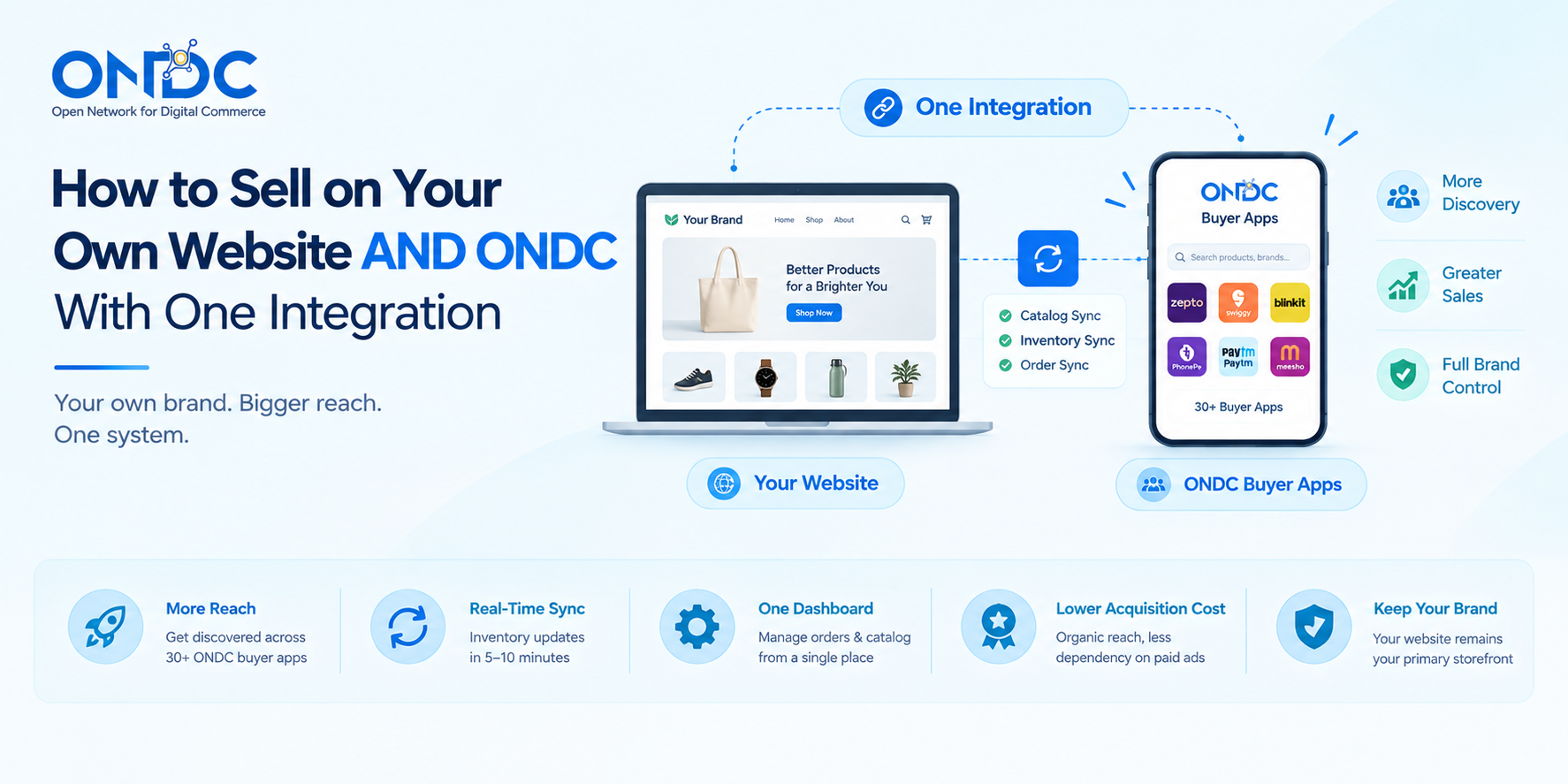
How to Sell on Your Own Website AND ONDC With One Integration
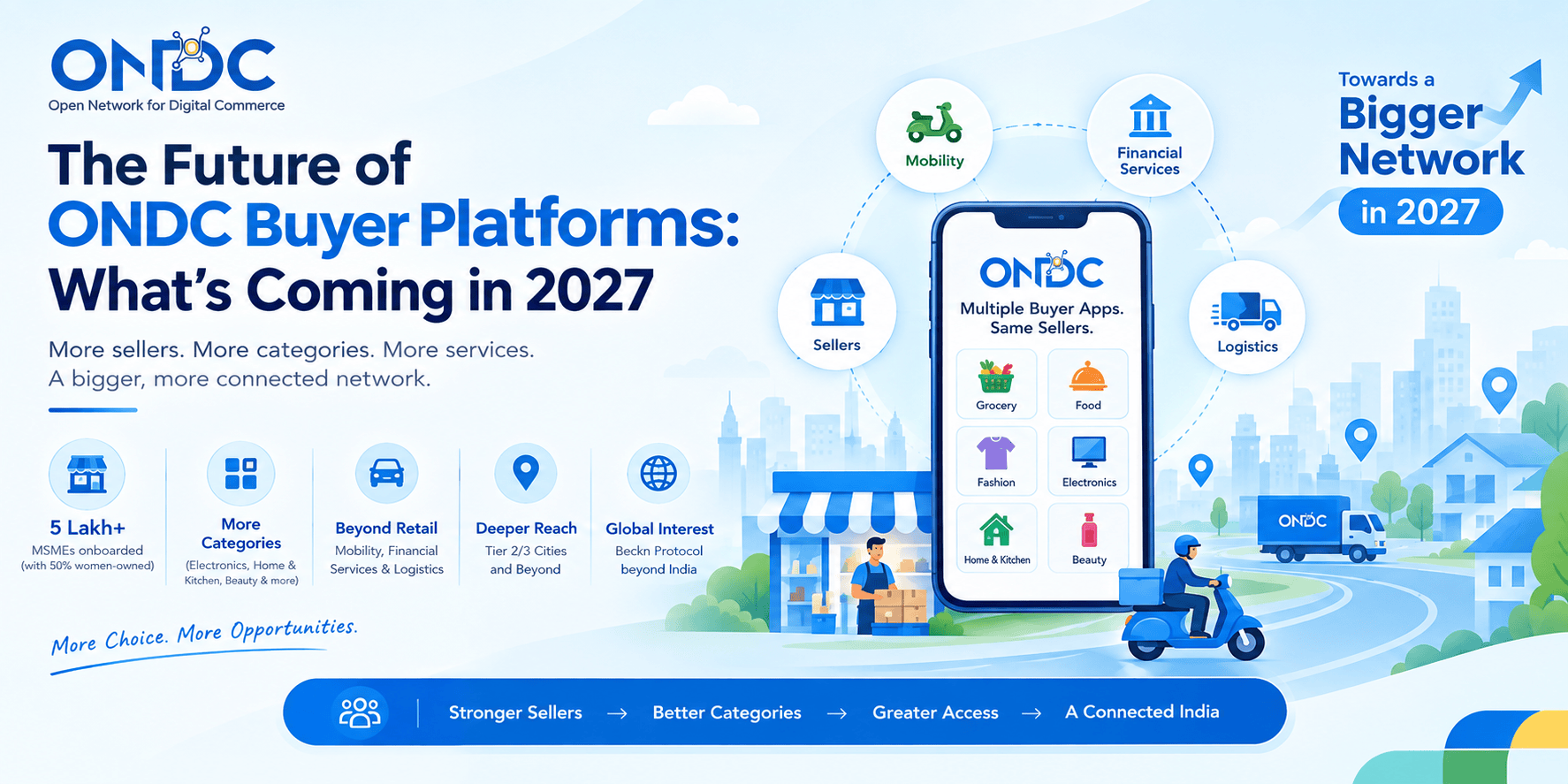
Future of ONDC Buyer Platforms: What's Coming in 2027
.png)
How Logistics & Delivery Partners Plug Into ONDC Buyer Platforms
.png)
Sounds like COSTBO might be the right choice for your business?
Get started by registering your business today! If you have any questions, we're here to help. Our team will reach out to you with detailed information about our offerings, product features, and a demo