

ONDC Seller App vs Your Own Website: Do You Need Both?
Should you sell through the ONDC Seller App or your own website? Discover the pros, cons, and how using both channels can help you grow revenue and reach more customers.
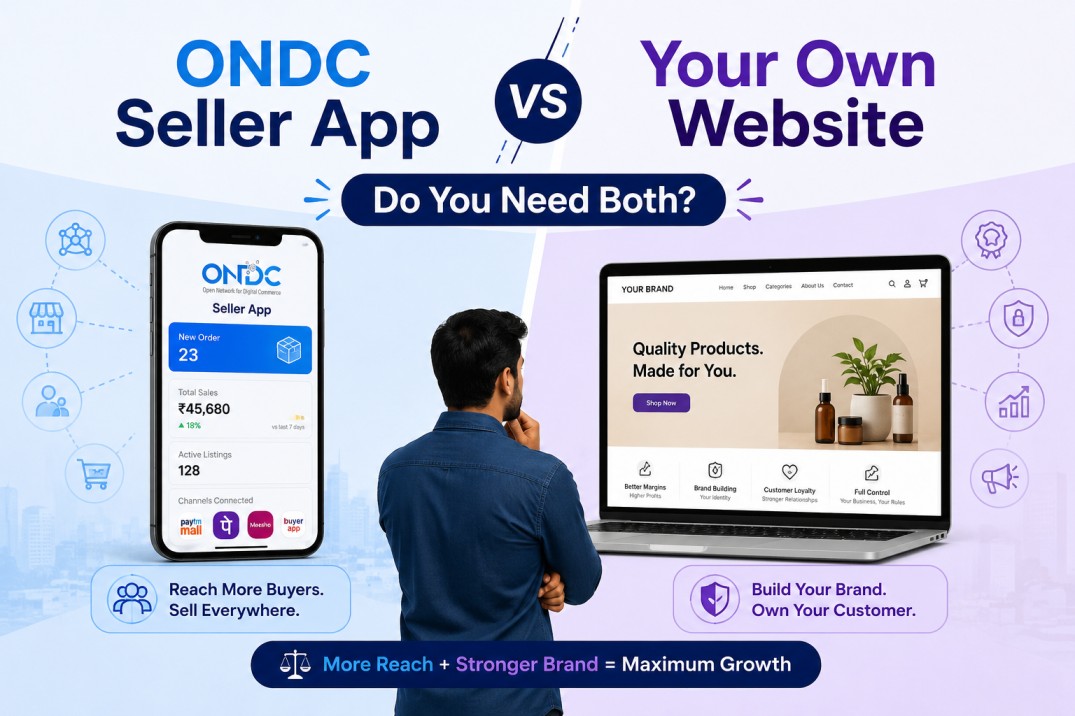
India's e-commerce story is being rewritten — and the numbers prove it. Monthly transactions on the Open Network for Digital Commerce (ONDC) have surged from just 1 million in early 2023 to over 15 million by the end of 2024, a staggering 15x growth in under two years. The network now spans more than 1,200 cities, with over 5.35 lakh sellers onboarded — 84% of them small businesses. By 2030, ONDC's projected Gross Merchandise Value is $48 billion.
Yet, here is the paradox every Indian seller faces today: in a country with 140 million Kirana stores and 1.2 million potential e-commerce sellers, only about 15,000 have actually enabled digital selling. The gap between opportunity and action is enormous — and the question holding many sellers back is deceptively simple:
Should I join an ONDC seller app, build my own website, or do I need both?
This blog breaks down that decision with data, real-world context, and a clear framework — so you can stop second-guessing and start selling smarter.
What Is an ONDC Seller App, Really?
ONDC is not a marketplace like Amazon or Flipkart. It is an open protocol — a digital highway that connects any seller app to any buyer app across the network. When you list your products on an ONDC seller app like Costbo, your catalogue becomes visible to buyers shopping on Paytm, PhonePe, Meesho, and dozens of other buyer-side platforms simultaneously.
Think of it this way: instead of opening a stall in one specific bazaar, you get a stall visible in every bazaar across the country — at once.
Key advantages of an ONDC Seller App:
- Instant multi-platform reach — One listing, discoverable across all ONDC buyer apps
- Lower commissions — ONDC's open competition structure drives platform fees significantly lower than traditional marketplaces
- No tech expertise needed — You do not need developers, hosting, or IT support
- Built-in logistics integration — Platforms like Costbo connect you to logistics partners within the network
- Government-backed credibility — Buyers increasingly trust ONDC as a secure, standardised network
- Faster onboarding — Go live in hours, not weeks
- Tier 2 & 3 market access — ONDC is actively expanding into smaller cities, where your own website would rarely reach organically
The ONDC network's retail purchase volumes grew six times in just six months in early 2024, reaching 3.6 million transactions in March 2024 alone. This is not a pilot program anymore — it is a functioning, growing commerce ecosystem.
What Does Your Own Website Offer?
A branded website is not dead — far from it. For the right seller, it remains a powerful asset. Here is what it brings to the table:
- Brand ownership — Your domain, your design, your story. No algorithm decides how you are presented.
- Customer data control — You own your buyer's contact information, purchase history, and preferences — data that ONDC buyer apps retain on their end.
- Customisation — Loyalty programmes, personalised offers, subscription models, and unique checkout experiences are all possible.
- SEO-driven organic traffic — A well-optimised website can generate free, long-term traffic from Google searches.
- No dependency on third-party apps — Policy changes on buyer apps do not affect your direct sales channel.
- Premium brand positioning — For luxury, niche, or sell d2c , a polished website signals seriousness and quality.
However, owning a website also means owning its problems: hosting costs, developer fees, payment gateway integration, security, and — most critically — customer acquisition. Building organic traffic takes months or years, and paid advertising can be expensive, especially for sellers in competitive product categories.
Head-to-Head: ONDC Seller App vs Your Own Website
The Real Question: What Stage Is Your Business At?
The ONDC vs own website debate is really a business maturity question. Here is a practical framework:
Stage 1 — New or Small Seller (0–₹5 lakh/month revenue)
Recommendation: Start with ONDC exclusively.
You need orders, not brand infrastructure. ONDC puts your products in front of millions of buyers immediately. The Ministry of MSME's TEAM Initiative is even providing financial assistance to help five lakh MSMEs onboard ONDC — including support for catalogue creation, account management, and logistics. Use this window.
Stage 2 — Growing Seller (₹5 lakh–₹50 lakh/month revenue)
Recommendation: ONDC as primary channel, begin building a landing page or website.
At this stage, you are generating enough revenue to invest in brand building. A simple website with product listings and contact information establishes credibility, and you can start collecting customer emails for direct marketing — something ONDC's network structure does not facilitate.
Stage 3 — Established Brand (₹50 lakh+/month revenue)
Recommendation: Both channels, operating in parallel.
ONDC drives volume and new customer discovery. Your website drives loyalty, repeat purchases, and premium positioning. At this stage, a unified catalogue and inventory management system (which platforms like Costbo help with) becomes essential to keep both channels in sync.
Why "Either/Or" Is the Wrong Question
The most successful digital-first Indian brands do not choose between channels — they stack them. Consider why:
ONDC expands the top of your funnel. A buyer in Patna who has never heard of your brand discovers your product on PhonePe through ONDC. They buy. They love it. Now, if they search your brand name on Google, your website should be there — converting that first-time ONDC buyer into a loyal direct customer.
Your website deepens the relationship. Repeat buyers who know your brand will prefer buying directly — especially if you offer exclusive deals, better return policies, or subscription options on your website. This is revenue that does not go through any platform.
Data from your website informs your ONDC strategy. Seeing which products drive the most direct traffic helps you prioritise cataloguing and promotions on ONDC.
The brands winning in India's digital commerce landscape treat ONDC as their acquisition engine and their own website as their retention engine.
The Costbo Advantage: Built for This Exact Strategy
Costbo is designed for sellers who want to move fast and scale smart. As an ONDC seller platform, Costbo handles the complexity of network integration so you can focus on your products and customers. Whether you are just starting or managing a multi-SKU catalogue, Costbo gives you:
- Seamless ONDC onboarding with guided catalogue setup
- Multi-buyer-app visibility from a single dashboard
- Integrated logistics and order management
- Analytics to track performance across the network
- Scalable tools that grow with your business
And when you are ready to build your own website, Costbo's infrastructure ensures your ONDC operations continue uninterrupted.
Conclusion: The Answer Is Yes — But Start Smart
Do you need both an ONDC seller app and your own website? Eventually, yes. But the sequencing matters enormously.
Start with ONDC. The network's growth trajectory — from 1 million to 15 million+ monthly transactions in under two years — means buyer traffic is real and growing. A seller app like Costbo gets you on that network without a single line of code or a rupee spent on digital marketing.
Build your website as your brand grows. Use it for retention, loyalty, and long-term brand equity — not as your primary discovery channel.
Integrate both for maximum impact. The future belongs to sellers who treat digital commerce as a multi-channel strategy, not a single-platform bet.
India's e-commerce penetration currently sits at around 7% of total retail — with ONDC's goal of pushing it to 25%, the opportunity ahead is massive. The sellers who position themselves now, on the right platforms, with the right strategy, will be the ones capturing that growth.
References
- ONDC Transaction Reports (2023–2025) — ijcsrr.org
- ONDC Network Records 5 Million Retail Orders in May 2024— CXOToday, June 2024
- Why ONDC Is Key to Unlocking India's E-Commerce Potential"
- MSME TEAM Initiative Press Release — PIB India
- The 5 Es to Drive Digital Commerce — PwC India, May 2024
- ONDC Official Network Data — ondc.org
About Costbo
Founded by Mr. Eswar and Mr. Ananth, with nearly 20 years of technology experience, Costbo is a leading ONDC seller platform powering India’s open digital commerce ecosystem. Costbo is among the first ONDC 1.2.0 certified seller platforms, enabling brands and sellers to sell on ONDC with fast onboarding, lower costs, and full operational control.
Ready to grow on ONDC? Start your journey with Costbo today.
Read More
- Building Blocks of ONDC: A Detailed Guide to India’s Open Digital Commerce Infrastructure
- ONDC A Revolutionary Open eCommerce Network – in Action
- Roles of Seller App & Buyer App on ONDC Network
- Why Sell Online Through the ONDC Network?
- Getting Started as a Seller on ONDC: Registration Options
- Which Is the Best ONDC Seller App? Features, Pros & Cons (2026)
- Best ONDC Buyer Apps in 2026: Features, Pros & Cons
- What is ONDC Buyer App
Related post
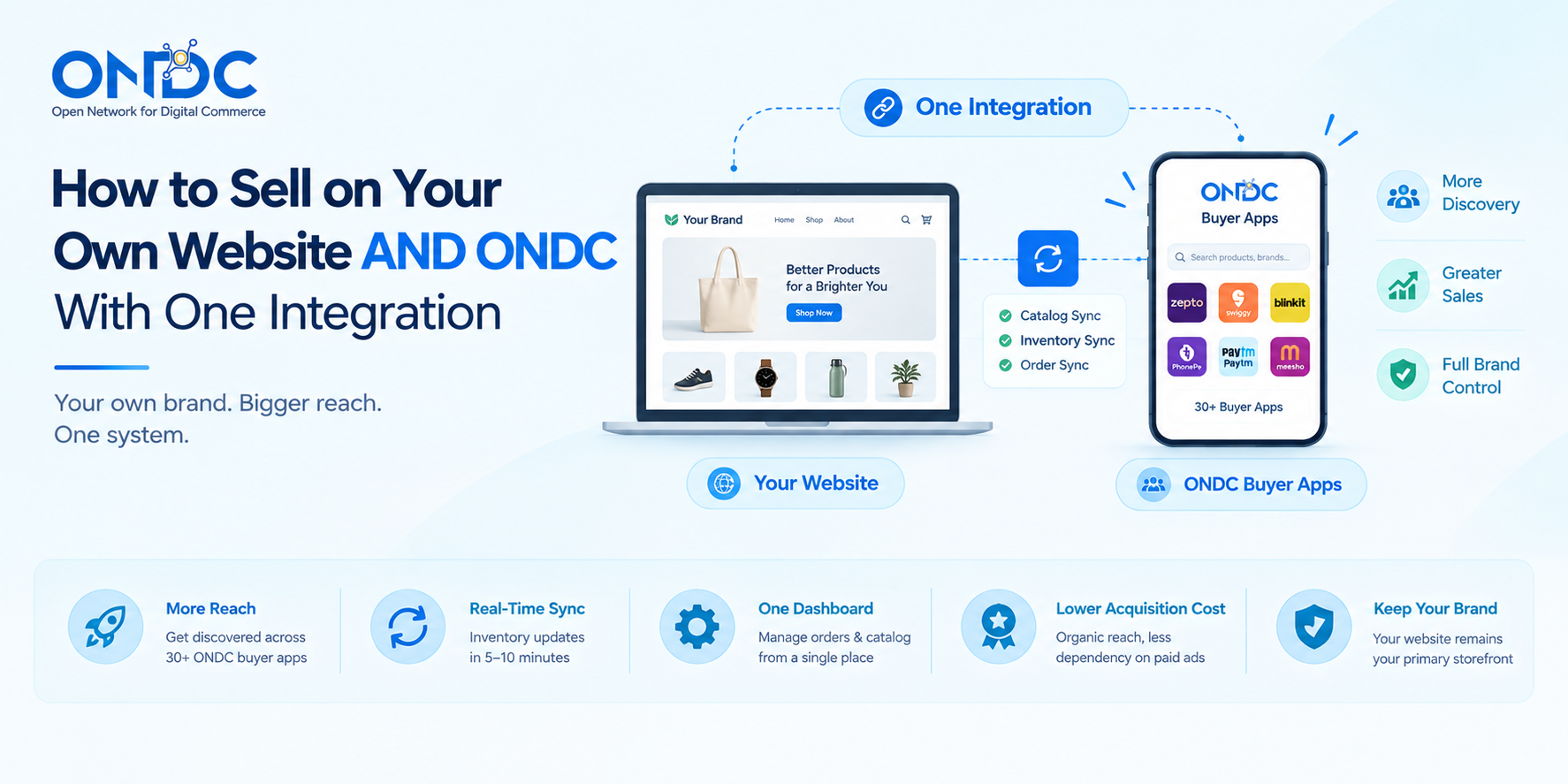
How to Sell on Your Own Website AND ONDC With One Integration
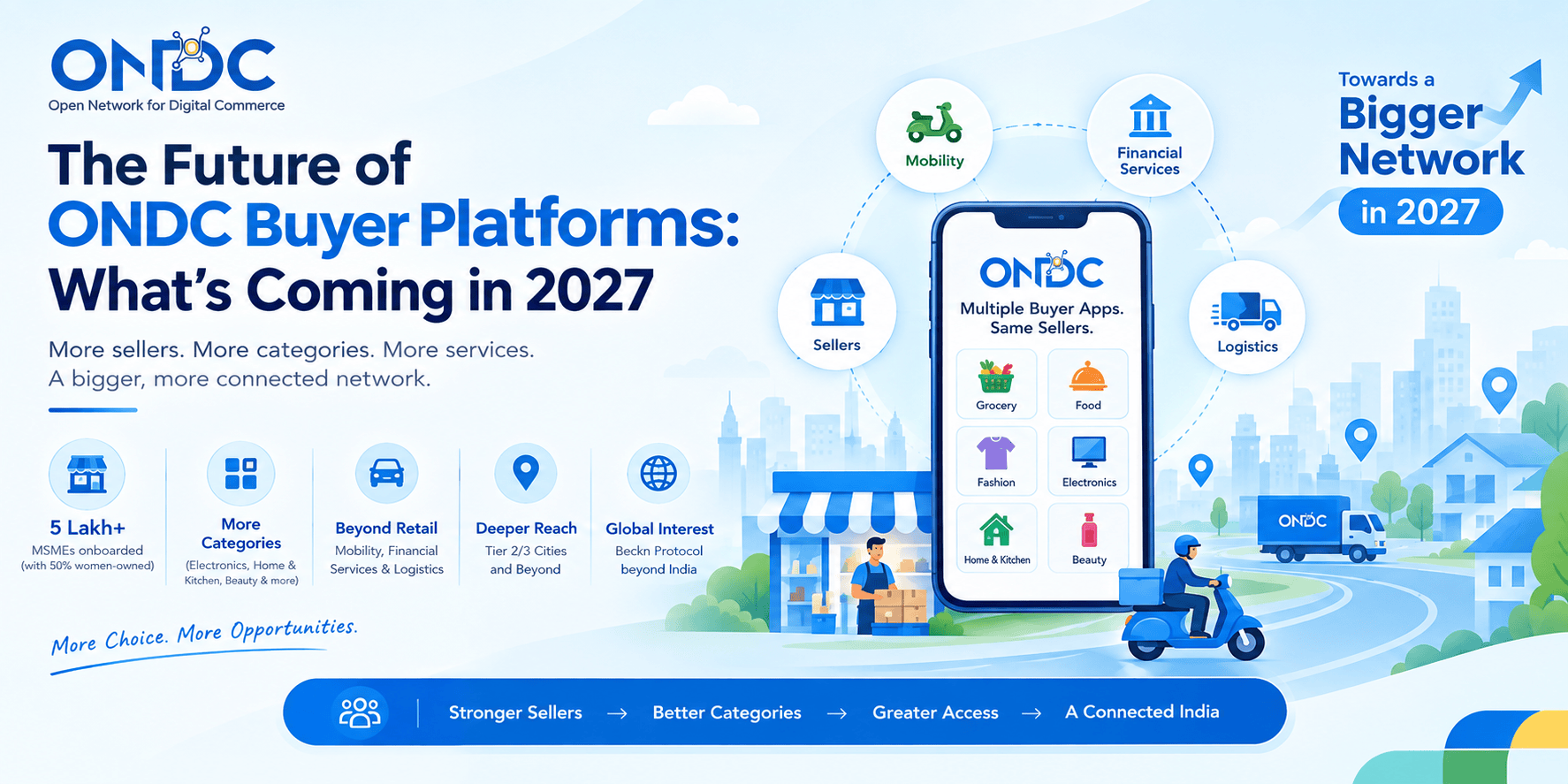
Future of ONDC Buyer Platforms: What's Coming in 2027
.png)
How Logistics & Delivery Partners Plug Into ONDC Buyer Platforms
.png)
Sounds like COSTBO might be the right choice for your business?
Get started by registering your business today! If you have any questions, we're here to help. Our team will reach out to you with detailed information about our offerings, product features, and a demo